
Are You Self-Medicating Your Marriage? The Hidden Link Between Drinking, Stress, and Communication Problems in Couples
Feb 24, 2026

Let me be real with you for a second: If you're pouring that second (or third, or fourth) glass of wine after scrolling through the news, reading another inflammatory post about politics, or just trying to decompress from the weight of everything happening in 2026: you're not alone. And if your partner is doing the same thing, but you're both sitting in separate rooms avoiding actual conversation? That's where things get messy.
Here's what nobody's talking about: The stress of living in 2026 isn't just giving us anxiety: it's quietly destroying communication in Ohio marriages. And for many couples, alcohol has become the bridge between "I can't deal with this" and "Let's just not talk about it."
The 2026 Anxiety Cocktail Is Fueling More Than Just Stress
If you read our recent post about the 2026 Anxiety Cocktail, you already know what's happening to our brains right now. Constant exposure to racial discord, political tension, economic uncertainty, and social media chaos is rewiring how we respond to stress. Our nervous systems are perpetually activated. We're tired, irritable, and emotionally flooded: all the time.
So what do we do? We reach for something to take the edge off.
For a lot of Ohio couples, that "something" is alcohol. And look: having a drink to unwind isn't inherently a problem. But when drinking becomes your primary coping mechanism for the overwhelming state of the world, and when it starts replacing actual communication with your partner, you've crossed into self-medication territory.

What Self-Medicating Actually Looks Like in Your Marriage
Self-medicating doesn't always look dramatic. It's not always the stereotypical "problem drinking" you see in movies. Most of the time, it's subtle. It creeps up on you. Here's what it can look like in real life:
- You drink to avoid difficult conversations. Your partner wants to talk about finances, the state of the country, or something one of you said that hurt the other person. Instead of engaging, you pour a drink and mentally check out.
- You use alcohol to numb feelings you don't want to deal with. Anger about injustice. Grief over what's happening in the world. Disappointment in your relationship. Resentment you haven't voiced.
- You drink more when your partner is around: or when they're not. Either you're drinking together in avoidance, or you're drinking alone to escape the tension in your home.
- Drinking has become part of your routine to "relax." It's no longer occasional: it's expected. You need it to unwind, to sleep, to tolerate the news cycle, to tolerate each other.
Here's the thing: alcohol might temporarily dull the discomfort, but it doesn't solve the problem. In fact, it makes communication worse.
The Cycle: Stress, Drinking, Poor Communication, Resentment, Repeat
Let's walk through how this plays out for so many Ohio couples right now:
Step 1: External stress floods your system. You see another headline about political violence, racial injustice, or social unrest. Your body goes into fight-or-flight. You feel angry, sad, helpless: pick your poison.
Step 2: You turn to alcohol to cope. It's quick. It's accessible. It numbs the emotional overload. For a few hours, you don't have to feel the weight of everything.
Step 3: Communication shuts down. Alcohol impairs your ability to articulate what you're feeling. It dulls your empathy. It makes you more reactive and less thoughtful. Instead of talking to your partner about what's bothering you, you avoid, dismiss, or lash out.
Step 4: Resentment builds. Your partner feels ignored, dismissed, or criticized. You feel misunderstood or judged. Neither of you is really addressing what's happening beneath the surface. The emotional distance grows.
Step 5: The cycle repeats. The next stressful event happens (and in 2026, that's daily), and you reach for the bottle again. The communication problems deepen. The connection erodes.
Research tells us that individuals who use alcohol to manage mood symptoms: stress, anxiety, depression: are significantly more likely to develop patterns of dependence. And when both partners in a marriage are doing this, the relationship itself becomes a casualty.

Why This Matters More in 2026 Than Ever Before
We're living in an unprecedented time. The level of collective stress, division, and uncertainty is unlike anything most of us have experienced. For couples in Ohio: whether you're in Cleveland, Columbus, Cincinnati, or anywhere in between: you're navigating not just your own relationship challenges, but the cultural and political weight of what's happening around you.
Racial discord and political tension aren't abstract concepts. They're showing up in your daily life. They're affecting your workplace, your social circles, your family dynamics. And if you're in an interracial relationship, or if you and your partner have different political views, the external chaos can seep directly into your home.
When alcohol becomes the way you manage that chaos, several things happen:
- You stop processing emotions together. Instead of turning toward each other for support, you turn toward substances.
- Conflict escalates or gets buried. Drinking can make arguments more volatile or cause you to stuff down issues that need to be addressed.
- Trust erodes. If one partner is concerned about the other's drinking, but can't bring it up without defensiveness, trust suffers.
- Intimacy disappears. Emotional intimacy requires vulnerability, presence, and clear communication: all of which alcohol undermines.
The Hidden Cost: What Happens to Your Spouse
Living with a partner who uses alcohol to self-medicate takes a toll. Maybe you're the one who's worried. You're watching your spouse drink more and more, and you don't know how to bring it up. You feel anxious, helpless, and sometimes resentful. You wonder if you're overreacting. You wonder if it's your fault.
Spouses of individuals who self-medicate often experience:
- Chronic stress and anxiety about their partner's behavior and safety
- Depression related to the isolation and disconnection in the relationship
- Reduced self-esteem and self-blame ("If I were enough, they wouldn't need to drink")
- Financial strain if drinking leads to other issues
And here's the hard truth: You can't control your partner's drinking. But you can control how you respond, how you take care of yourself, and whether you seek support.

Chapter 4 of "The Quintessential Connection" Workbook: Substance Use and Self-Medication
This issue is so pervasive in the couples we work with that we dedicated an entire chapter to it in our workbook, The Quintessential Connection. Chapter 4 dives into how substance use: especially alcohol: intersects with stress, communication, and intimacy.
In this chapter, you'll find:
- Reflection exercises to help you identify patterns in your own drinking or your partner's
- Communication scripts for bringing up concerns without triggering defensiveness
- Strategies for processing stress and difficult emotions without turning to substances
- Worksheets to rebuild trust and accountability if drinking has caused harm in your relationship
The workbook isn't about judgment. It's about awareness, honesty, and creating a path forward together.
What Support Looks Like: Alcohol Counseling and Marriage Counseling in Ohio
If any of this is hitting close to home, you're not broken. You're human. And support is available.
For individuals: If you're using alcohol to cope with stress, anxiety, or the state of the world, alcohol counseling in Ohio can help you explore healthier coping strategies. Approaches like cognitive behavioral therapy (CBT) and motivational interviewing are effective for addressing both the underlying emotional issues and the substance use itself.
For couples: Marriage counseling in Ohio can create a space where both partners feel heard, where you can address the ways stress and drinking are affecting your relationship, and where you can rebuild communication and trust. Couples therapy isn't about pointing fingers: it's about understanding the patterns and creating new ones together.
Both can happen concurrently. In fact, research supports treating mood or anxiety issues alongside substance use, rather than waiting to address one before tackling the other.
At Quintessential Wellness Solutions, we work with Ohio couples who are navigating exactly these issues. We get it. We see how the external chaos of 2026 is bleeding into homes. And we're here to help you find a way through that doesn't involve numbing out or shutting down.
A Gentle Reality Check
Here's what we're not saying: that you can never have a drink, that all alcohol use is problematic, or that you're a bad person if you've been self-medicating.
Here's what we are saying: If drinking has become your primary way of coping with stress, and if it's getting in the way of honest communication with your partner, it's worth paying attention to.
You deserve a relationship where you feel connected, not numb. Where you can talk about the hard stuff without needing liquid courage or liquid escape. Where you and your partner are turning toward each other instead of away.
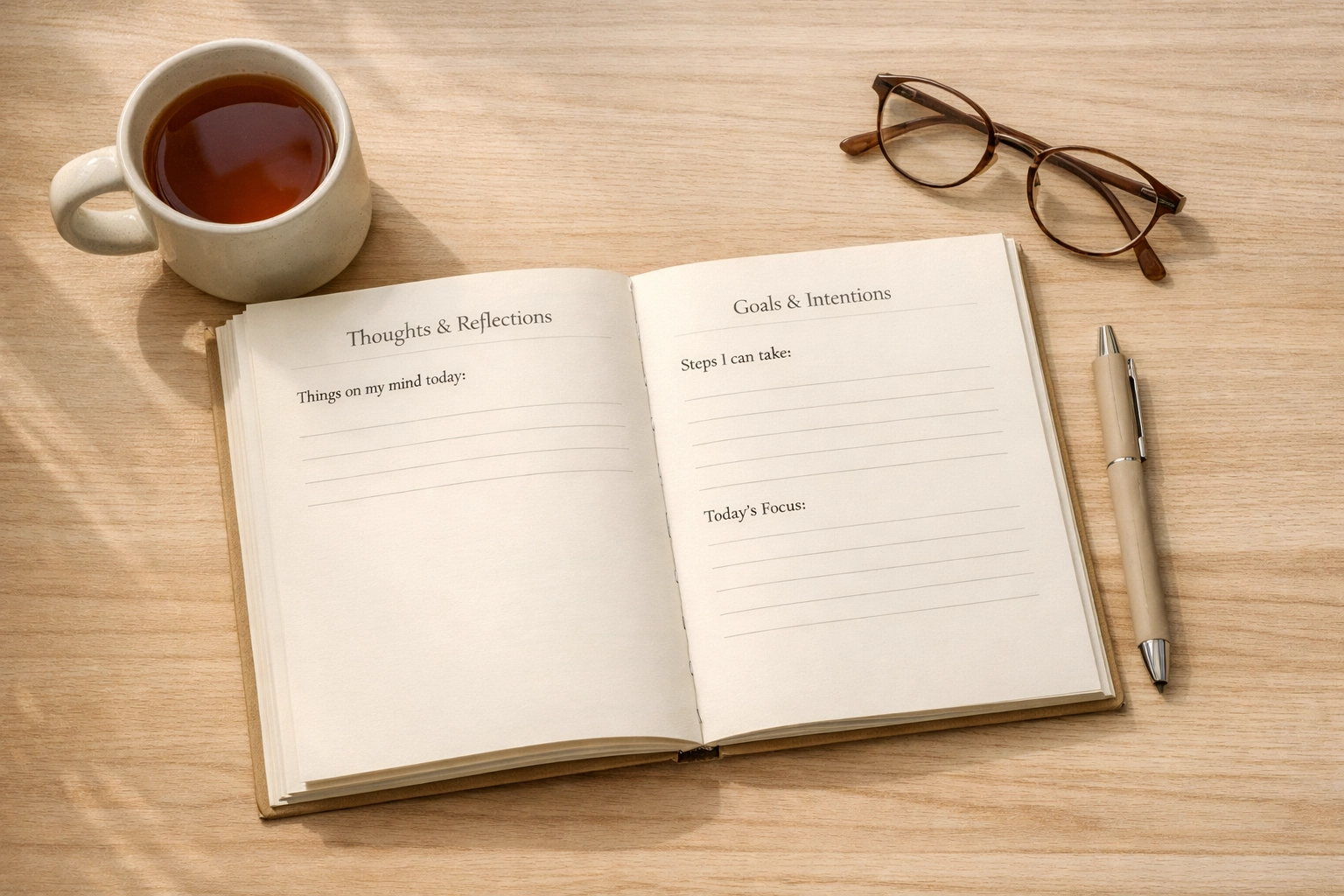
What Happens Next Is Up to You
If this post resonated, you're not imagining things. You're noticing something real. And noticing is the first step.
You might consider:
- Having an honest conversation with your partner about what you're both using alcohol for and whether it's serving you
- Exploring The Quintessential Connection workbook to work through some of these patterns together
- Reaching out for alcohol counseling in Ohio if individual support feels right
- Looking into couples therapy in Ohio if the communication breakdown is affecting your relationship
Support doesn't mean you've failed. It means you're paying attention. It means you care about your relationship and yourself enough to do something different.
This content is for informational purposes and is not a substitute for professional mental health care. If you or your partner are struggling with substance use or relationship distress, speaking with a licensed professional can be a helpful next step.
A brief 15-minute consultation gives you space to share what you’re looking for and learn how we can support you—no pressure, just clarity.
Stay connected with news and updates!
Join our mailing list to receive the latest news and updates from our team.
Don't worry, your information will not be shared.
We hate SPAM. We will never sell your information, for any reason.
