
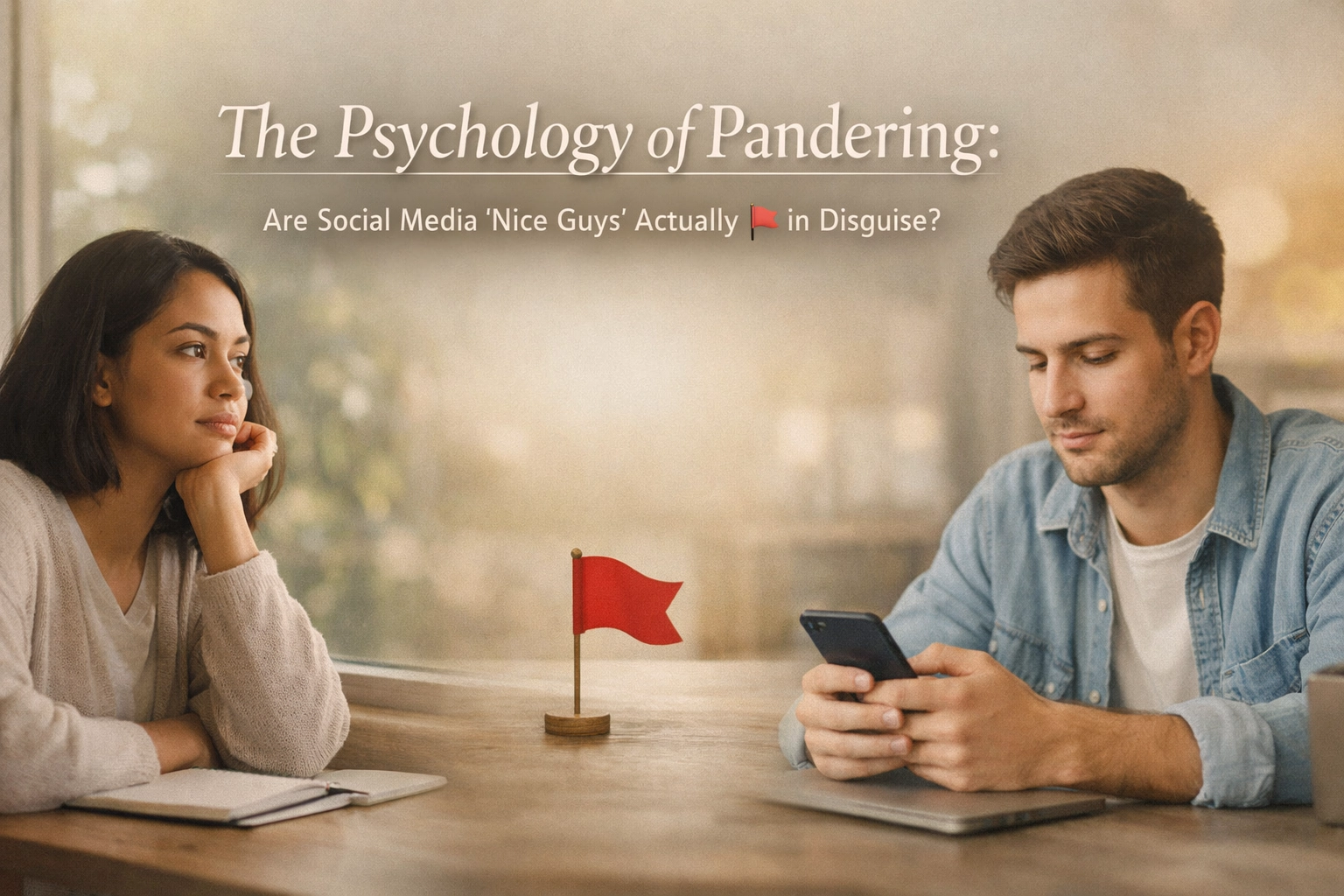
The Psychology of Pandering: Are Social Media 'Nice Guys' Actually 🚩 in Disguise?
Feb 06, 2026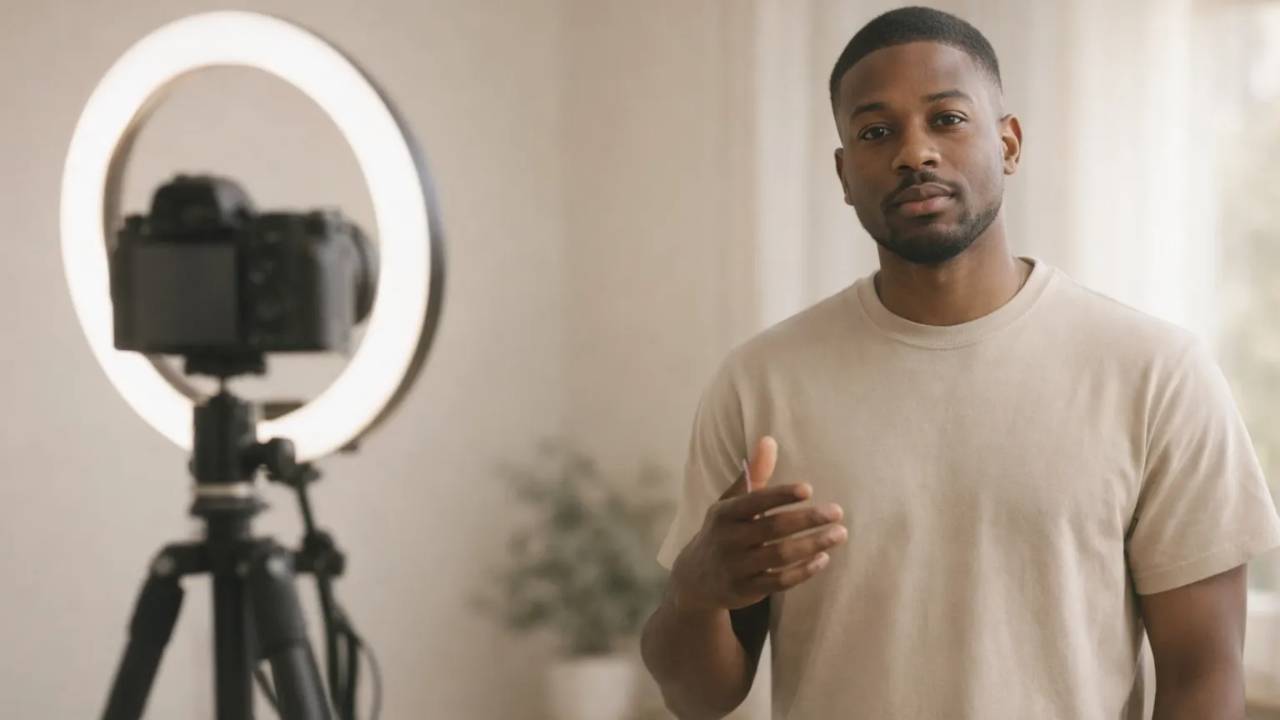
You've seen them in your feed. The male influencer who posts daily about emotional labor, toxic masculinity, and how women deserve better. The guy who shares endless content about "green flags" and "how a real man should treat his queen." The self-proclaimed "accountable king" whose entire brand revolves around telling women exactly what they want to hear.
And here's the question nobody seems to be asking out loud: Is this genuine advocacy, or is it something else entirely?
Let's get curious about the psychology of pandering: and why your gut might be telling you something important.
What Does Social Media Pandering Actually Look Like?
Before we dig into the psychology, let's be clear about what we're talking about. Pandering, in this context, isn't just a man having opinions about gender dynamics or sharing relationship advice. It's a specific pattern of behavior:
- Content that consistently validates a specific audience (usually women) while positioning the creator as morally superior to other men
- Performative displays of empathy that feel scripted or exaggerated
- Heavy use of buzzwords and trending language without much depth or nuance
- A conspicuous absence of vulnerability or personal accountability in their own lives
- Strategic alignment with causes or movements that increase visibility and follower count
The content often sounds supportive. But when you step back and look at the pattern over time, you start to notice something: it's less about the message and more about the messenger's brand.

Do Women Actually Find This Attractive?
Here's where it gets interesting. Research on social media behavior shows that pandering is often driven by what psychologists call "perverse incentives": users are motivated more by engagement (clicks, likes, shares) than by genuine connection or accuracy.
So do women find this attractive? The answer is nuanced.
Validation feels good. When someone appears to "get it" and speaks to your experiences, there's an initial rush of being seen and understood. That's human nature. Many women, especially those who've experienced dismissive or invalidating relationships, may initially feel drawn to content that seems empathetic and supportive.
But authenticity matters more. Over time, most people can sense the difference between someone who genuinely holds these values and someone who's performing them. When the empathy feels rehearsed, when the language sounds like it's been focus-grouped, or when the creator's actions don't match their words, the appeal tends to fade.
Women aren't a monolith, and attraction isn't just about hearing the "right" words. It's about consistency, integrity, and genuine emotional availability: qualities that can't be faked long-term, even with a well-curated Instagram grid.
The Clinical Perspective: Is This a Red Flag?
From a therapeutic standpoint, let's explore what this behavior pattern might indicate.
Performative empathy is a real phenomenon. It's when someone displays concern or understanding not because they feel it, but because it serves a social function: approval, status, or influence. Clinically, this often overlaps with traits like:
- Impression management: Excessive concern with how one is perceived by others
- Superficial charm: The ability to say what people want to hear without emotional depth
- Lack of authentic self-disclosure: Sharing curated "vulnerability" that doesn't actually risk anything
Does this automatically mean someone is manipulative or dangerous? No. Human behavior exists on a spectrum, and motives are often mixed. Someone can genuinely care about gender equity and enjoy the social currency it brings them.
However, when the behavior is consistent and extreme: when someone's entire online presence is built around telling a specific demographic exactly what they want to hear: it may signal what we call virtue signaling rather than authentic advocacy.
The potential red flag isn't the content itself. It's the pattern of using that content to gain something (followers, money, status) while maintaining very little actual accountability or personal cost.

What Are They Really Seeking to Gain?
Let's be direct: social media is an economy. Attention is currency. And pandering: when done strategically: works.
Here's what male influencers who engage in performative pandering may be seeking:
Follower growth and engagement. Content that validates a large audience (like women frustrated with dating or gender dynamics) generates shares, saves, and comments: all of which boost algorithmic visibility.
Financial benefit. More followers means sponsorship deals, course sales, speaking engagements, and affiliate income. Creating a "brand" around being the "emotionally intelligent guy" is lucrative.
Social status and influence. Being seen as "one of the good ones" provides access to communities, conversations, and platforms that might otherwise be closed.
Romantic or sexual attention. Let's not be naive. Some men use performative allyship as a dating strategy: presenting themselves as safe, enlightened partners while their private behavior tells a different story.
Ego validation. For some, the praise and admiration from followers feeds a need for external validation or a sense of moral superiority.
None of this happens in a vacuum. The digital economy incentivizes this behavior. Platforms reward engagement, not authenticity. And audiences: starved for representation and validation: are often willing to overlook red flags when someone is saying what they desperately want to hear.
Being Seen vs. Being Manipulated: How to Tell the Difference
Here's the million-dollar question: How do you distinguish between someone who genuinely advocates for healthier relationship dynamics and someone who's using that language to manipulate you?
Look for consistency over time. Does their behavior match their content? Do they practice what they preach in their own relationships (if they share about them at all)?
Notice the vulnerability. Authentic advocacy includes owning mistakes, sharing growth, and admitting when they don't have all the answers. Pandering rarely includes true accountability.
Check the receipts. Are they affiliated with products, courses, or movements that benefit them financially every time they post? Does every "heartfelt" post conveniently link to something they're selling?
Pay attention to nuance. Real conversations about gender, relationships, and emotional health are complex and sometimes uncomfortable. Pandering tends to be black-and-white, always positioning the creator as morally superior.
Trust your gut. If something feels performative, it probably is. Your instincts about authenticity are more reliable than you think.

Why This Matters for Your Actual Relationships
If you're someone who consumes relationship advice online: especially if you're working through trust issues, communication struggles, or trying to figure out what healthy partnership looks like: this conversation matters.
Performative content can distort your expectations. It can make you think that a partner who uses the "right" language is automatically safe or emotionally available. It can make you overlook behavior that doesn't match the words.
In therapeutic work, especially in marriage counseling in Ohio and therapy in Massachusetts, one of the most important skills we explore is discernment: learning to read not just what someone says, but how they say it and whether their actions align.
Authenticity in relationships isn't about perfect language. It's about:
- Consistent behavior over time
- Willingness to be accountable when you mess up
- Vulnerability that costs you something
- Actions that match your stated values
If you're struggling to figure out whether someone in your life (online or off) is being genuine or manipulative, that's a conversation worth having with a professional who can help you sort through those patterns.
The Bottom Line: Stay Curious, Not Cynical
Here's the thing: not every male influencer who talks about relationships or gender dynamics is pandering. Some men genuinely care about these issues and use their platforms to advocate for change. Some are doing the internal work and sharing what they've learned along the way.
But some aren't.
The goal here isn't to make you cynical or suspicious of everyone who posts relationship content. It's to help you stay curious and discerning. To ask questions like:
- What is this person gaining from this content?
- Does their behavior match their messaging?
- Am I being invited to think critically, or just to validate the creator?
- Does this content help me grow, or does it just make me feel good in the moment?
Social media can be a tool for connection and learning, but it can also be a marketplace where influence is sold and your attention is the product. Knowing the difference can protect not just your feed, but your relationships, your boundaries, and your sense of what's real.
If you're navigating relationship dynamics: whether online or in your actual partnership: and you're not sure what's healthy anymore, that's what support from Quintessential Wellness Solutions is here for. Because real growth happens in spaces where you're invited to think, question, and explore: not just consume.
And that's something no algorithm can replicate.
A brief 15-minute consultation gives you space to share what you’re looking for and learn how we can support you—no pressure, just clarity.
Stay connected with news and updates!
Join our mailing list to receive the latest news and updates from our team.
Don't worry, your information will not be shared.
We hate SPAM. We will never sell your information, for any reason.
